How to Improve Local SEO for Small Dental Practices in 2026
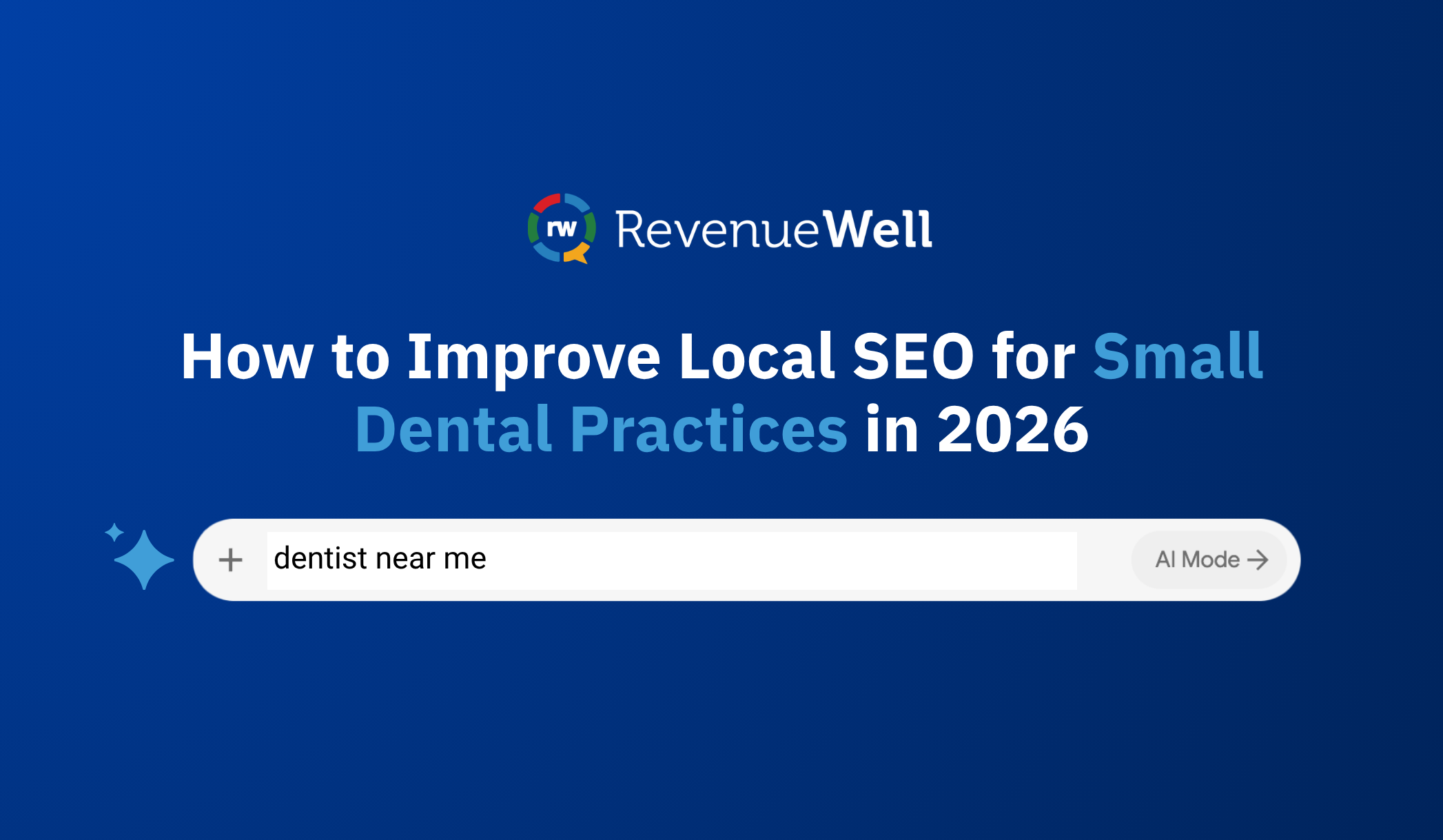
When a potential patient searches "dentist near me" into their phone, your practice either shows up—or it doesn't. Local SEO determines which side of that equation you land on. For small dental practices competing against larger groups and DSOs, mastering local search is one of the most effective ways to attract new patients without increasing your ad spend.
You may have heard that Google's AI is changing how search works. That's true—but here's the reassuring part: local dental searches are largely protected from that disruption. Patients searching for a dentist near them still trigger traditional local results, including the map pack and Google Business Profiles. The fundamentals of local SEO aren't going away—they're becoming more important. A well-optimized local presence now does double duty, powering both your visibility in search results, and the AI-generated answers and voice search responses patients increasingly rely on.
This guide covers everything you need to know about local SEO for dentists, from setting up your Google Business Profile to optimizing your website and building a review strategy that drives patient acquisition.
By the end of this guide, you'll have a clear roadmap for improving your practice's local search rankings and turning online searches into scheduled appointments.
Key Takeaways: How to Improve Local SEO for Small Dental Practices
- Google Business Profile optimization is the foundation of local SEO—complete profiles with accurate information rank higher in local search results and now feed AI-generated answers and voice search responses.
- Your dental website needs location-specific content, mobile optimization, fast load times, and clearly structured answers to patient questions to convert local searchers into patients.
- Online reviews directly impact local search rankings and influence patient decisions—a consistent review strategy is essential.
- Schema markup (LocalBusiness, Service, and FAQ) helps both search engines and AI systems understand your practice and surface it accurately.
- Local citations and consistent NAP (Name, Address, Phone) information across directories strengthen your practice's local search authority.
- RevenueWell's digital marketing services help dental practices optimize their local listings, websites, and content to improve search visibility.
What Is Local SEO and Why Does It Matter for Dental Practices?
Local SEO is the process of optimizing your online presence to attract patients from searches with local intent. When someone searches "dentist in [your city]" or "emergency dental care near me," search engines use local SEO signals to determine which practices to display.
For dental practices, local SEO matters because most patients choose dentists based on proximity and convenience. According to Google's own guidance, businesses with complete and accurate information are easier to match with the right searches.
How Local SEO Differs from Traditional SEO
Traditional SEO focuses on ranking for broad keywords across a national or global audience. Local SEO narrows that focus to a specific geographic area. The ranking factors differ as well.
Local search results depend heavily on three factors:
- Relevance (how well your profile matches the search)
- Distance (how close you are to the searcher)
- Prominence (how well-known and trusted your practice appears online).
It's worth noting that prominence has evolved—Google now weighs real-world engagement signals more heavily than it once did. A newer practice generating strong activity on its Google Business Profile through reviews, calls, and direction requests can outrank a more established competitor with lower engagement. That's good news for small practices willing to stay consistent.
The Local Pack: Where You Want to Be
The "Local Pack" is the map listing that appears at the top of search results for local queries. This prime real estate shows three businesses with their locations, ratings, hours, and a link to directions.
Appearing in the Local Pack dramatically increases visibility. Practices that consistently appear here typically see more phone calls, website visits, and direction requests than those buried in organic results below. As Google's AI capabilities expand, your Local Pack presence also increasingly feeds voice search answers and AI-generated summaries—making every detail in your profile a potential answer source for patients asking things like "Is the dentist open on Saturdays near me?"
How to Set Up and Optimize Your Google Business Profile
Your Google Business Profile (formerly Google My Business) is the single most important factor in local SEO for dentists. This free listing controls how your practice appears in Google Search and Maps—and it now powers AI-generated responses and voice search results as well.
Claiming and Verifying Your Profile
If you haven't already, claim your Google Business Profile at business.google.com. Google will verify that you own the business, typically through a postcard sent to your practice address or a phone verification. Verification usually takes 5–14 days.
Completing Every Section of Your Profile
A complete profile ranks better than an incomplete one. Fill out every available field, including:
- Business name: Use your exact practice name as it appears on your signage and other materials. Avoid keyword stuffing.
- Address: Enter your complete street address exactly as it appears on your website and other listings.
- Phone number: Use a local phone number rather than a toll-free number when possible.
- Business hours: Keep hours accurate and update them for holidays or schedule changes.
- Business category: Select "Dentist" as your primary category. Add secondary categories like "Cosmetic Dentist" or "Pediatric Dentist" if applicable.
- Services: List all services you offer, from routine cleanings to specialized procedures.
- Business description: Write a clear description of your practice, including your location and specialties.
Each structured data point—your hours, services, location—is something Google's AI and voice assistants can reference when answering patient queries directly. A half-filled profile is a missed opportunity on multiple fronts.
Adding Photos and Videos to Your Profile
Profiles with photos receive more engagement than those without. Add high-quality images of your office interior, exterior, team members, and equipment. Update photos at least quarterly—fresh content signals to Google that your profile is active. Consider adding a virtual tour to help patients feel comfortable before their first visit.
Using Google Posts to Stay Active
Google Posts let you share updates, offers, events, and articles directly on your Business Profile. Post regularly—weekly is ideal. Share information about new services, practice updates, oral health tips, or community involvement. Posts expire after seven days, so consistency matters.
How to Optimize Your Dental Website for Local Search
Your website works alongside your Google Business Profile to improve local rankings. A well-optimized dental website helps search engines understand your location, services, and relevance to local searches.
Creating Location-Specific Pages
If your practice serves multiple areas, create dedicated pages for each location or service area. Each page should include the city or neighborhood name in the title, headings, and content. A page titled "Family Dentist in [Your City]" performs better for local searches than a generic "Services" page. Include directions, parking information, and nearby landmarks to reinforce the local connection.
Writing Content That Answers Patient Questions Directly
Structure your website content around the questions patients actually ask, and lead with the answer rather than building up to it. Adding a FAQ section to service pages—with short, plain-language responses—makes information easier to find for patients and easier for search engines and AI systems to understand and reference. Writing for patients first and writing for search are the same thing today.
Optimizing Title Tags and Meta Descriptions
Title tags and meta descriptions tell search engines and users what each page is about. Include your location and primary services in these elements. For example: "Smith Family Dentistry | Dentist in Springfield, IL | Cleanings, Implants & More." Keep titles under 60 characters and meta descriptions under 160 characters.
Adding Schema Markup for Dental Practices
Schema markup is code that helps search engines—and AI systems—understand your website content. For dental practices, three types matter most:
- MedicalBusiness schema (your practice name, address, phone, hours, and medical specialties)
- Service schema (the treatments you offer)
- FAQ schema (your question-and-answer content)
Together, these improvements help your practice appear more prominently in both traditional search results and AI-generated responses. RevenueWell's website and SEO services help ensure your site includes the technical elements, such as schema markup and structured data, that search engines and AI platforms use to better understand your practice.
Ensuring Mobile Optimization and Page Speed
Most local searches happen on mobile devices, and Google uses a mobile-first indexing approach when evaluating websites. Your website must load quickly and display correctly on smartphones and tablets—pages should load in under three seconds, buttons should be easy to tap, and text should be readable without zooming. Tools like Google PageSpeed Insights can identify specific issues. If you don’t have in-house development support, many practices choose website platforms designed specifically for dental offices to ensure mobile performance, speed, and user experience stay optimized over time.
How to Build and Manage Citations for Your Dental Practice
Citations are online mentions of your practice's name, address, and phone number (NAP). These mentions on directories, review sites, and local business listings help establish your practice's legitimacy and improve local rankings.
Building Citations on Key Directories
Start with the directories that matter most for dental practices:
- Google Business Profile: The most important listing for local SEO.
- Yelp: A major source of patient reviews and local search traffic.
- Healthgrades: Healthcare-specific directory patients use to find and evaluate providers.
- Zocdoc: Popular platform for finding and booking dental appointments.
- Facebook: Your business page serves as a citation and review source.
- Apple Maps: Important for iPhone users searching for nearby dentists.
- Bing Places: Microsoft's local business directory.
Also claim listings on dental-specific directories like 1-800-Dentist, DentalPlans.com, and your state dental association's directory.
Maintaining NAP Consistency
Inconsistent information confuses search engines and patients alike. Choose one format for your name, address, and phone number, and use it the same way everywhere. After any practice changes—a move, a new phone number, a rebrand—update your Google Business Profile first, then work through other directories systematically.
How to Get More Online Reviews for Your Dental Practice
Online reviews directly impact both patient decisions and local search visibility. According to a 2025 local search consumer behavior study, 75% of consumers read at least four reviews before choosing a local business. For dental practices, that means your online reputation can play a major role in whether a prospective patient contacts your office or a competitor.
Why Reviews Matter for Local SEO
Google considers review quantity, quality, and recency when ranking local businesses. Beyond rankings, reviews influence whether someone clicks on your listing—and they now contribute to the engagement signals that factor into how Google measures prominence. A consistent stream of genuine patient feedback is one of the most powerful local SEO tools available to a small practice. This has become even more important as Google increases its focus on business authenticity and combats misleading online information. For more context, see our article on what dental practices need to know about Google's crackdown on misrepresentation.
Asking Patients for Reviews at the Right Time
The best time to request a review is immediately after a positive experience. Train your front desk team to ask satisfied patients if they'd be willing to share their experience online, and follow up with a direct link to your Google review page via text or email. Many practices use automated patient communication tools to request reviews after appointments, making it easier to maintain a steady flow of feedback without adding extra work for staff.
Responding to All Reviews—Positive and Negative
Responding to reviews shows that you value patient feedback. Thank patients for positive reviews and address concerns in negative reviews professionally—acknowledge the issue, apologize for their experience, and invite them to contact you directly. Avoid getting defensive or sharing private health information.
Managing Reviews Across Multiple Platforms
While Google reviews have the biggest impact on local SEO, monitor and respond to reviews on Yelp, Healthgrades, Facebook, and other platforms where patients leave feedback. Set up alerts or use a review management tool to ensure you never miss an opportunity to engage.
What to Look for in a Dental SEO Provider
Look for providers with specific experience in dental or healthcare marketing. A good provider should discuss Google Business Profile optimization, citation building, review management, schema markup, and patient-focused content—not just website keywords.
Before signing a contract, ask: What specific local SEO tactics will you use? How do you measure results? What dental experience do you have? Be wary of anyone guaranteeing specific rankings or promising overnight results.
Understanding Realistic Timelines and Red Flags
Local SEO results typically take three to six months to materialize. Watch out for providers who make guarantees that sound too good to be true, offer vague explanations of their tactics, have no dental industry experience, or lock you into long-term contracts with no performance benchmarks.
How to Track and Measure Your Local SEO Performance
Key Metrics for Local SEO
Focus on metrics that connect directly to patient acquisition:
- Google Business Profile views: How many people see your listing in search and maps.
- Profile engagement actions: Clicks to call, website visits, and direction requests. These signals now influence your local ranking, so tracking actions—not just views—matters more than ever.
- Local keyword rankings: Where you appear for searches like "dentist in [your city]."
- Website traffic from local searches: Visits from people searching for dental services in your area.
- Phone calls and form submissions: Direct measures of leads from your online presence.
Using Insights and Analytics
Google Business Profile includes built-in analytics showing how patients find and interact with your listing—check these monthly and pay attention to which search queries trigger your listing. Google Analytics helps you understand website behavior after patients find you through local search; set up goal tracking to measure calls, form submissions, and appointment requests. RevenueWell's Insights feature gives practices easy-to-understand reporting to track performance and identify opportunities.
Common Local SEO Mistakes Dental Practices Make
- Ignoring Google Business Profile updates. Outdated hours, old photos, and stale posts signal neglect. Schedule regular updates—photos quarterly, posts weekly, information reviewed monthly.
- Inconsistent NAP information. If your address or phone number appears differently across directories, it can hurt rankings. Create a reference document with your official NAP and use it everywhere.
- Neglecting mobile users. Test your website on actual mobile devices and click through as a patient would to catch any friction points.
- Keyword stuffing. Forcing location terms into every sentence hurts more than it helps. Write naturally for patients first.
- Burying answers in dense content. Patients—and search engines—are looking for clear, direct answers. Lead with the key information, use headings that reflect real patient questions, and keep FAQ responses concise.
- Buying fake reviews. Google actively removes them, and the penalties can include suspension of your listing. Earn genuine reviews from real patients.
Building a Long-Term Local SEO Strategy for Your Practice
Local SEO isn't a one-time project. Break it into manageable monthly tasks: update your Google Business Profile information, add new photos, publish Google Posts, monitor and respond to reviews, check for website errors, and review your analytics. When your website, reviews, social presence, and patient communications all align, each channel reinforces the others.
Focus on fundamentals rather than chasing every algorithm update. Complete, accurate business information, clearly structured website content, and genuine patient reviews will remain important regardless of specific changes—including the AI-driven ones reshaping search more broadly. RevenueWell's digital marketing experts have more than 35 years of experience generating high-quality leads for dental practices, handling the technical and strategic work so you can focus on patient care.
In Conclusion: Taking the Next Steps for Better Local Search Visibility
Improving local SEO for your dental practice doesn't require technical expertise—it requires consistent attention to the fundamentals. Start with your Google Business Profile, ensure your website serves local visitors well, build citations on relevant directories, structure your content to answer patient questions directly, and develop a systematic approach to earning reviews.
The practices consistently appearing at the top of local search results aren't bigger or better-funded than yours. They've committed to the basics and maintained that commitment over time. In the era of AI-powered search, that consistency matters even more—because a well-optimized local presence now extends your reach into voice search and AI-generated answers without any extra effort.
Pick one area from this guide to focus on this week. Small, consistent actions compound into significant results.
FAQs About Local SEO for Small Dental Practices
How do I choose the right dental SEO provider?
Focus on providers with dental-specific expertise, transparent reporting, and a proven approach to improving local search visibility, patient inquiries, and long-term practice growth.
How long does it take to see results from local SEO?
Most dental practices start seeing improvements within three to six months. Some changes, like completing your Google Business Profile, can show results faster. Consistency matters more than speed—practices that maintain their efforts see compounding benefits over time.
Do I need to hire an SEO company, or can I do this myself?
You can handle basic local SEO yourself. Google Business Profile optimization, review management, and citation building don't require technical expertise. More complex tasks like schema markup, website speed optimization, and competitive analysis often benefit from professional help. RevenueWell's SEO services handle these technical aspects while you focus on patient care.
How important are Google review for local SEO?
Very. Practices with more positive recent reviews typically rank higher and convert more searchers into appointments. Review quality and recency both matter, and reviews now contribute to engagement signals that influence local rankings. RevenueWell automates review requests after appointments to help practices build their reputation consistently.
How does Google's AI affect local dental SEO?
Google's AI Overviews have changed how some search results appear, but local dental searches are largely protected from this disruption. What has changed is that your Google Business Profile data and structured website content now feed into AI-generated answers and voice search responses—making a complete, well-organized profile more valuable than ever.
How often should I update my Google Business Profile?
Add new photos and posts at least monthly. Review your basic information quarterly and update immediately after any practice changes—new hours, phone numbers, or services. Active profiles signal to Google that your information is current and reliable.
Can I do local SEO if I have multiple practice locations?
Yes, but each location needs its own Google Business Profile and location-specific website content. Search engines treat each location as a separate entity, and each profile needs to generate its own engagement independently.
What role does my website play in local SEO?
Your website supports your Google Business Profile by giving search engines more information about your practice. Location-specific content, schema markup, mobile optimization, and patient-focused FAQ content all strengthen local signals—and convert visitors into patients once they find you. RevenueWell's website design services create dental websites optimized for both search visibility and patient conversion.
Are online directories still important for local SEO?
Yes. Directory listings help verify your practice information and build authority through consistent mentions. Focus on quality over quantity—Google, Yelp, Healthgrades, and dental-specific directories matter far more than obscure listings.
RevenueWell helps dental practices improve their online visibility through SEO strategies that go beyond keywords—optimizing websites, content, and local listings to boost visibility and attract high-value patients. Book a quick consultation today.