How Dental SEO Can Help Practices Can Stand Out in Competitive Markets
Competing online as a dental practice can feel like an uphill climb. Search results are crowded, with over 200,000 dentists in the U.S., a number expected to keep growing through 2040. In addition, patients’ expectations have also changed with many wanting their dentists and other healthcare providers to offer a convenient experience they’re already used to. They have more options and can choose to be picky.
Even though it can feel challenging to stand out at times, it’s not impossible. With a thoughtful SEO approach, your practice can do more than keep up. You can stand out as the obvious choice, attract the right patients, and strengthen your reputation in the process.
Let’s break down the two important pillars of SEO success for dental practices, visibility and trust, along with practical steps you can start applying to your strategy.
Why SEO Matters for Dental Practices
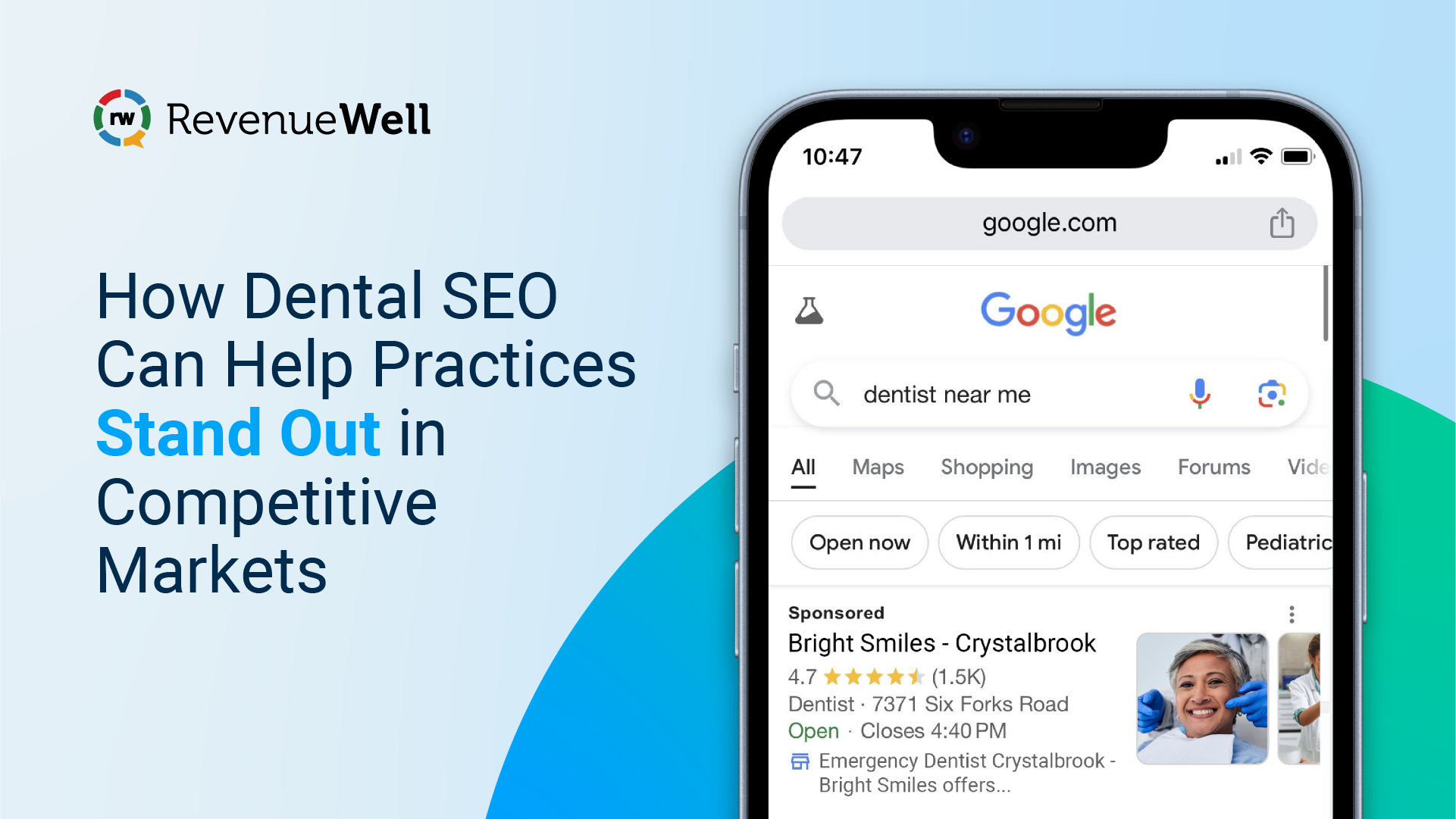
More patients than ever are searching online before booking appointments. They’re typing in keywords like “emergency dentist near me” or “Invisalign in [city name] ” based on what they need from a dentist.
If your practice doesn’t appear near the top of search engines, you’re practically invisible.
Think of SEO as your storefront sign. If it’s hidden down a dark alley (near the bottom of a search engine), patients will pass you by. If it’s right on Main Street (close to the top or at the top), patients will find you and walk in.
How to Boost Your Online Visibility in Search?
You can’t get chosen if you’re not found. Visibility is about making sure your practice shows up where patients are searching for dental care.
Here are some ways you can do that:
- Optimize your Google Business Profile: Keep your hours, services, contact information, and practice photos up to date. This is often the first impression patients get of your practice.
- Get listed in online directories: Claiming your profiles on sites like Yelp, Healthgrades, and Yellow Pages signal consistency and increase your exposure in search engines. Make sure your practice name, address, contact information, what services you offer, and what insurances you accept are consistent everywhere.
- Use patient-friendly keywords: Think like your ideal patient(s): “same-day crown near me,” “kids’ dentist [city],” or “dental implants [city].” Add these keywords naturally to your site content. Don’t force it. If the keyword doesn’t make sense in a particular page or sentence, then don’t add it.
- Be mobile-first: Most dental searches happen on phones, so your site must be fast, easy to navigate, and designed to be easy to use on a mobile device.
- Leverage fresh content: Post blogs and add FAQs to your website that answer common patient questions. This not only helps patients, but they also signal to Google that your site is active and relevant.
- Add paid advertising to your marketing strategy: SEO paired with paid advertising widens your online exposure so patients can find you. There are different types of paid advertising options out there, so choose the strategy that makes the most sense for your practice based on your goals.
How to Build Trust and Credibility Online?
Visibility gets you seen. Trust gets you chosen. Patients (and search engines like Google) are looking for signs that your practice is professional and credible.
How to do that:
- Collect and respond to patient reviews: Positive, recent reviews build patient confidence. Responding to reviews in a HIPAA-compliant way shows you value patient feedback.
- Secure your website: Make sure your site has HTTPS. A secure site protects patient data.
- Show your expertise with content: Publish accurate, helpful dental content that your ideal patients want to learn more about and where your expertise is. For example, if you offer specialty services like braces, implants, or root canals, then you can create or hire an expert to develop content based on those topics. And that content can be repurposed across your email, newsletters, social media, and website.
- Keep your website content up to date: Your prospective patients are judging your website so make it a weekly to-do to review and update your website content and links. Or if you work with an outside vendor to manage your website, then check that they regularly audit and update your website.
- Be active on social media: Having a social media account for your practice is no longer a “nice-to-have.” It’s necessary to reach your patients and build trust. About 90% of Americans use social media for health information so it’s in your best interest to be active on the channels where your ideal patients are. Being active means posting a variety of content including educational tips on oral hygiene, special promos you’re running, and useful practice information like new dental insurances you’re accepting to name some.
You’ll see that some of these recommendations overlap with each other, and that’s because visibility and trust go together when it comes to ranking online.
Interested in seeing where your practice ranks against the competition? Check out Evaluate My Practice to find out.