Dental Insurance Verification: Why MFA Reliability Matters More Than You Think
Multifactor authentication (MFA) is a step in dental insurance verification that isn’t talked about nearly enough. But it plays a critical role in whether verifications run smoothly or grind to a halt, especially if you have an automated insurance verification tool that you rely on.
MFA is a security measure many payer portals require to confirm a user’s identity. In addition to a username and password, MFA typically involves a second verification step like a one-time code sent by text message, email, or authentication app. It’s designed to protect sensitive patient and financial data, but when it’s not managed reliably, it can unintentionally disrupt your front office team’s insurance verification process.
You probably know the frustration well:
A verification that should be automatic suddenly stalls. Coverage details look incomplete. You're forced to jump back into a payer portal by trying to remember your login credentials, completing MFA, double-checking benefits, or even calling the carrier directly just to confirm eligibility.
One of the most common and least discussed root causes behind these disruptions is MFA session timeouts or expirations, and here’s why it needs more attention and how it affects your insurance verification process.
How MFA Interruptions Disrupt Dental Insurance Verification
Most dental insurance verification tools depend on active payer portal sessions. When those sessions expire or MFA times out, the verification process can break in these ways:
- Systems fall back to EDI-only data, which is often less complete and less reliable
- Eligibility and benefit details become outdated or inaccurate
When this happens, your team is left with more manual work:
- Calling the insurance provider to gather the coverage details
- Re-entering or resubmitting verification requests
- Reconciling conflicting coverage information
These small interruptions add up quickly, increasing the amount of work you have to do and raising the risk of missed benefits, inaccurate estimates, and patient frustration at check-in. And you already do enough as it is because verifying insurance isn’t your only task.
Why EDI-Only Dental Insurance Verification Has Limitations
When payer portal access is interrupted, some automated insurance verification systems rely solely on EDI dental insurance verification data as a fallback. While EDI is helpful for basic eligibility confirmation, it often lacks the detailed benefit information practices depend on, such as:
- Frequency limitations
- Downgrades and exclusions
- Remaining annual maximums
- Procedure-level coverage rules
This means verifications may appear complete but are actually missing key details that affect treatment planning, financial discussions, and claims accuracy. This means you still have to track down those details, adding extra work to your already busy day.
Security Improvements Are Part of the Picture
Automated MFA handling isn’t just about convenience; it supports stronger security practices as well.
Systems designed with MFA automation typically include:
- Regular password rotation
- Stricter MFA compliance standards
- Secure credential management without repeated staff input
This reduces the risk associated with shared logins, expired passwords, or delayed MFA challenges, issues that increasingly trigger portal lockouts or access failures.
The Role of Automated MFA in Modern Dental Insurance Verification
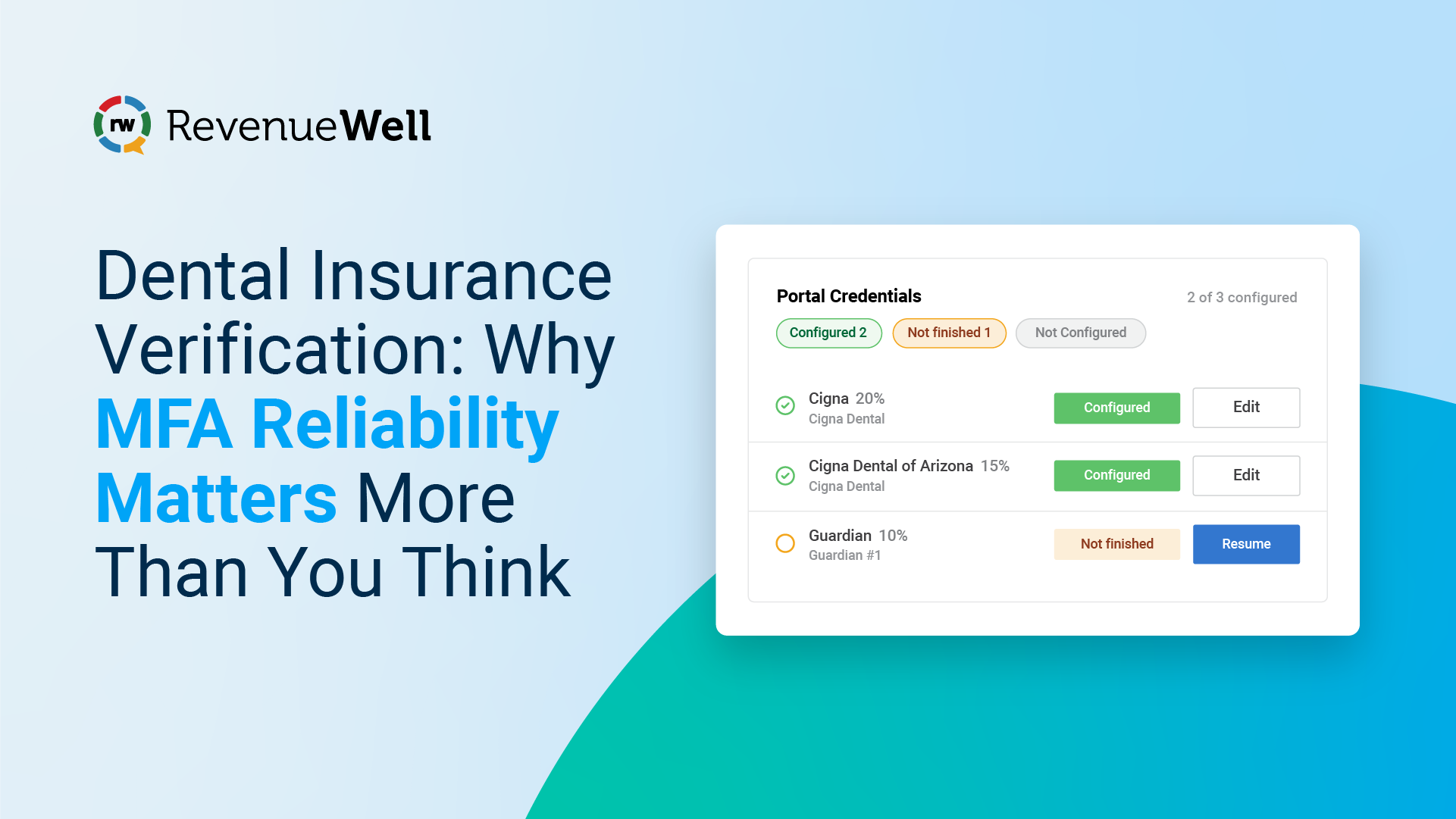
Some insurance verification tools now handle MFA automatically in the background. When they first get set up, they do have to enter their credentials for each payer portal, but once that’s been done, the system will take over.
Rather than requiring staff to repeatedly enter temporary codes or reauthenticate sessions, MFA challenges are securely managed and refreshed without disrupting verification workflows.
For dental practices, this approach supports:
- Consistent dental insurance verification across payer portals
- Reduced reliance on EDI-only fallback data
- More accurate eligibility and benefits information
- Less manual intervention from front desk staff
The result is a dental insurance verification process that runs quietly and reliably, without pulling staff away from patient-facing responsibilities.
Key Questions to Ask Insurance Verification Vendors Around MFA
When comparing insurance verification solutions, consider asking:
- How do you handle MFA when payer portal sessions expire?
- Do verifications fall back to EDI data, and how often?
- Will our team need to manually enter MFA codes?
- How do you prevent verification downtime caused by timeouts?
- What safeguards exist to keep portal access active?
The answers can tell you a lot about how reliable verifications will be and how much more work you’ll have to do.
How Reliable Dental Insurance Verification Supports a Better Patient Experience
It affects much more than administrative tasks. When verification is uninterrupted and accurate, you benefit from:
- Faster, smoother patient check-ins
- More confident financial conversations
- Fewer claim surprises and rework
- Reduced front desk stress
Your patients won’t directly experience MFA or timed out portal sessions, but they feel the difference when insurance questions are answered clearly and confidently, and you share the most up-to-date coverage details.
Sometimes the most valuable enhancements to insurance verification are the ones that remove friction you didn’t even realize was there, and automated MFA is an example of that.
As needs change in the dental space, so will the functionality behind insurance verification tools in the market.
Reliability matters just as much as automation. Systems that quietly prevent disruptions, especially those related to MFA, keep verifications moving along, so your team can have confidence knowing their tools are doing what they’re supposed to do.
RevenueWell’s AI-driven dental insurance verification tool uses payer portals and EDI to validate patients’ insurance prior to their appointments so you can focus on putting together cost estimates. Our system supports automated multi-factor authentication once a practice connects to their payer portals, inputs their credentials, and adds RevenueWell as a user. You maintain full control of your credentials, but the system routes the passwords and codes, keeping you connected to payer portals and reducing the likelihood of losing access. Schedule a demo with RevenueWell to learn more about the functionality and how it can support your team.